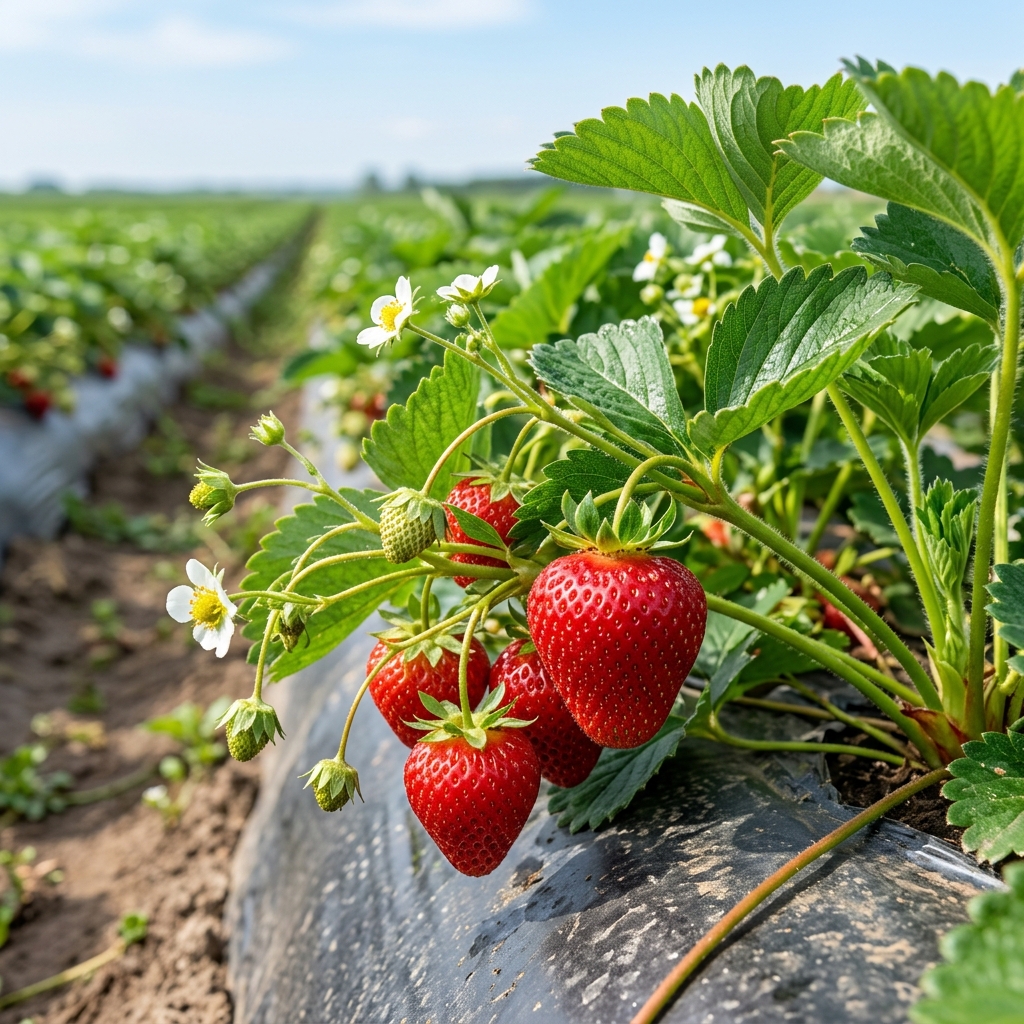
Every strawberry season in Beheira is written by the same three variables — the winter temperature curve, the picking rhythm it allows, and how fast field heat comes off the fruit. Nothing else in the operation can compensate for those being wrong.
Delta silt and a short winter
The blocks sit on Nile Delta silt, worked continuously for generations. It is a heavy, water-retentive soil, which is a virtue under drip irrigation and a liability in a wet spell, and the growing programme is built around that fact rather than against it.
What makes the Egyptian window commercially interesting is that the winter here is short and mild. Fruit runs through the months when Northern Hemisphere production is at its thinnest — which is precisely the part of a year-round listing that is hardest for a buyer to cover.
The day–night differential
The differential, not the daytime maximum, is what shapes the fruit. Cool nights slow respiration, so sugars accumulate instead of being spent, and the flesh sets firm. Mild days keep the plant working without pushing colour ahead of maturity.
When nights lift, three things happen together: colour arrives before the fruit is structurally ready, the picking window narrows, and the proportion of the crop suited to a retail punnet falls. A season is not judged by its best week. It is judged by how the programme is arranged around the weeks that behave differently.
Picking to the destination, not to the schedule
Fruit is picked at the maturity the destination requires. That sounds obvious and is routinely inverted: it is far easier to pick to a labour schedule and let the specification absorb the difference.
The practical consequence is that pick timing is a commercial decision made with the agronomy team, not a logistics decision made downstream of it. A block destined for a long onward leg is picked differently from a block going into the tunnel the same day.
The shelf life a buyer never sees is lost between the block and the pre-cooler, not in transit.
Field heat is the first loss of the day
Crates move from the block to pre-cooling the same morning. Fruit picked at dawn and left standing in ambient heat has already spent part of the shelf life the buyer is paying for, and no cold store recovers it afterwards. Removing field heat early is the least glamorous part of a harvest programme and the one with the largest effect on what arrives.
What the season hands to the frozen lines
Fresh and frozen are not competing for the same fruit; they are competing for the same hours in the day. The shoulder weeks at each end of the window, and the calibres that were never destined for a retail pack, are what keep the IQF lines running on a stable specification — which is why a programme built on both routes is steadier than one built on either.
The mechanics of what happens after the tunnel doors close are covered in what IQF freezing actually does to the fruit.